
Controlling ostomy odor is a top priority for many people living with a stoma. Odor worries can affect confidence just as much as practical day-to-day care. In the Ostomy Life Study that took place in 2019, 62% of respondents said stoma-related concerns had caused them to avoid physical or social activities.
See our companion guide: Why Does My Ostomy Bag Smell? if you want to understand the reasons odor develops in the first place. This article focuses on the next step. That means practical and actionable ways to control and reduce odor.
There is no single product or technique that completely eliminates odor in every situation. Evidence and patient experience suggest that combining two or three strategies at the same time can make odor unnoticeable. The sections below move from simple everyday habits to more advanced solutions. You can start making changes immediately.
Ensure a Proper Seal — The Foundation of Odor Control
Odor control always starts with a secure pouch seal. Gas and output can escape an ill-fitting stoma. No deodorizer or filter will fully compensate for a poor seal.
The WOCN Peristomal Skin Assessment guidance and ostomy care recommendations consistently place pouch fit at the center of preventing leakage and odor issues.
Key areas to check:
- Measure the stoma regularly – size often changes during the first 6–8 weeks after surgery.
- Choose the correct barrier type – flat and convex barriers suit different stoma profiles.
- Use barrier rings or seals – these help fill folds and uneven skin surfaces.
- Watch for warning signs including itching under the wafer, moisture beneath the barrier, lifting edges, and skin irritation
Science Insights identifies these as early signs of seal failure. A WOC nurse can assess the appliance and recommend adjustments if you have problems.
Replace Worn-Out or Expired Equipment
Modern ostomy pouches use multiple protective layers designed to contain odor and gas. Science Insights notes these systems rely on advanced barrier films, but materials gradually lose effectiveness over time.
The American Nurse Journal – ostomy basics (2024) wear time guidance suggests the following replacement times:
- Colostomy: every 5–7 days
- Ileostomy / urostomy: every 3–4 days
Replace earlier if leaks or skin changes appear. Waiting too long can weaken odor control and increase the chance of seal problems.
Empty and Clean the Pouch Correctly
Routine pouch care has a direct impact on odor control. WOCN and NHS discharge guidance commonly recommend emptying the pouch when it reaches around one-third to one-half full to avoid a noticeable colostomy bag smell. A pouch that becomes too full creates pressure on the seal and increases the chance of leakage.
Simple habits make a difference:
- Empty before the pouch becomes heavy or stretched – 1/3 to 1/2 full
- Rinse drainable pouches with lukewarm water if appropriate
- Clean the skin around the stoma during appliance changes
- Dry the skin completely before applying a new barrier (moisture can impact adhesion)
- Avoid oily creams or products near the stoma area
Dietary Adjustments to Reduce Odor
Diet is one of the easiest areas to adjust because changes can be tested quickly. You do not need to remove every trigger food. The goal is to identify patterns and manage timing and portions.
Foods commonly linked with stronger odor in studies from MedlinePlus and other organizations include:
- Garlic and onions
- Eggs and fish
- Broccoli, cabbage, Brussels sprouts
- Asparagus
- Baked beans
- Strong cheeses
- Beer and alcohol
Some foods are commonly recommended to help reduce odor:
- Live-culture yogurt
- Parsley
- Cranberry juice
- Buttermilk
- Peppermint tea
Keeping a food diary for around two weeks can be a top tip to reduce ostomy odor. This often reveals personal triggers more effectively than avoiding large groups of foods unnecessarily.
Stay Hydrated
Hydration can help dilute output. This is particularly true for urostomy patients. More concentrated output may produce stronger odor.
Aim for consistent fluid intake throughout the day rather than drinking large amounts all at once. Even small changes in hydration habits can noticeably improve odor control.
Use Charcoal Filters to Neutralize Gas Odor
Activated charcoal filters are built into many modern ostomy pouches and are also available as add-on products. They work by allowing gas to pass through a porous carbon layer that traps odor molecules on its surface. This process (adsorption) helps reduce smell while also releasing trapped gas.
Charcoal filter options include:
- Integrated filters built into pouch systems, such as Safe n’ Simple pouches with built-in filter, or Natura+ or Esteem+ style pouches
- Adhesive add-on filters, such as Coloplast Filtrodor, which can be attached to compatible pouches
Filters can help:
- Reduce odor as gas leaves the pouch
- Decrease ballooning pressure by allowing gas to escape
- Improve comfort during daily wear
Filters do not last forever. The American Nurse Journal explains that moisture can reduce effectiveness. This is why many manufacturers recommend covering filters during bathing or swimming. If gas control becomes noticeably worse, the pouch or filter may need replacing.
Pouch Deodorants: Drops, Sprays, and Gels
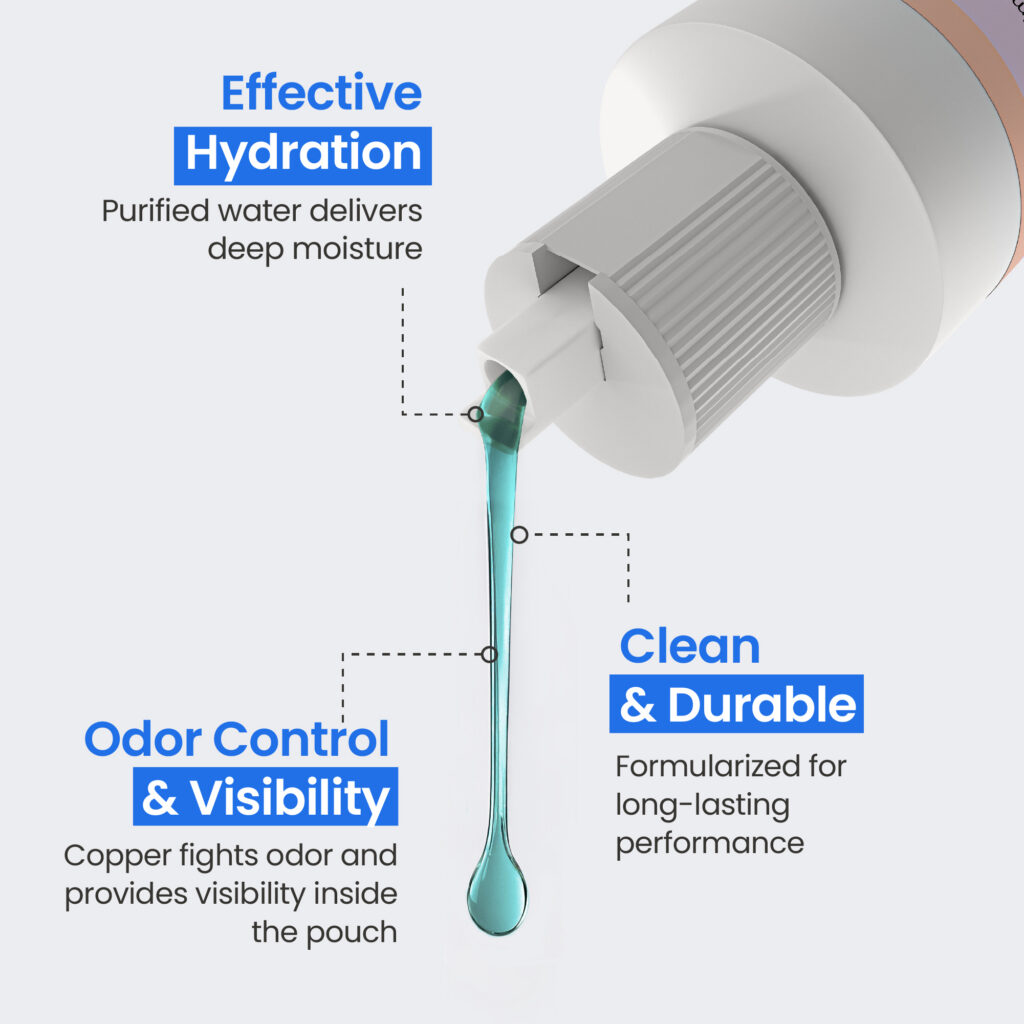
In-pouch deodorants are designed to neutralize odor directly inside the appliance rather than simply masking it.
Common options include:
- Liquid drops or sprays – added after emptying
- Lubricating deodorants – these reduce odor and help output slide downward
- Gel sachets – to absorb liquid output and reduce odor and pouch noise
Avoid placing household perfumes or air fresheners inside the pouch. These products are designed for the air, not medical appliances, and may irritate skin or affect pouch materials.
Essential Oils as a Complementary Option
Some patients ask about essential oils for odor management. While a dedicated pouch deodorant remains the most reliable choice — formulated specifically for use with ostomy systems and tested for material compatibility — emerging research has examined essential oils as a complementary measure. One randomized controlled trial involving lavender oil reported improvements in perceived odor and quality-of-life measures among some ostomy patients (Yousef et al., 2024, European Journal of Oncology Nursing).
Where they have been studied, very small amounts were used — typically 1–2 drops, or around 0.5 cc, introduced into the pouch at changes. Some studies suggest avoiding citrus oils, as they may degrade pouch materials.
Essential oils are not suitable for everyone and are not a replacement for a proper pouch deodorant. If you’re considering them, discuss it with your stoma nurse or healthcare professional first to ensure they’re appropriate for your situation and compatible with your appliance.
Internal (Oral) Deodorants
Some odor-control methods work before output reaches the pouch. Internal deodorants are designed to reduce odor-producing compounds during digestion.
One of the best-known options is bismuth subgallate (Devrom®):
- FDA-approved for stool and flatulence odor control
- Typical dose: 200–400 mg with meals, up to 4 times daily
- Can be chewed or swallowed
- Works inside the digestive tract before odor reaches the pouch
A double-blind study by Sparberg (1974) reported odor reduction in ileostomy patients. Later research continued examining its use in gastrointestinal surgery patients.
Temporary darkening of stools or the tongue can occur but is generally harmless.
Chlorophyll tablets are another option sometimes used by ostomates. Evidence supporting them is less established.
Always speak with a healthcare provider before starting oral deodorants or supplements.
Ostomy Pouch Covers and Wraps
Pouch covers and wraps can provide an extra layer of odor management and comfort. Even with a functioning pouch system, heat and pressure from clothing may affect performance over time.
Some covers offer:
- Extra fabric between the pouch and clothing
- Improved comfort and discretion
- Reduced rubbing against the skin
- Antimicrobial materials in some designs
Research has explored odor-control fabrics containing materials such as carbon, zeolite, and antimicrobial components. These products may provide additional support, but they work best alongside proper pouch fit and routine care rather than as a replacement.
When to Consult a Healthcare Professional
Odor control products and routine adjustments do not solve every issue. Persistent odor needs further assessment.
Consider contacting a healthcare professional if you notice:
- Strong odor that does not improve
- Redness or unusual discharge
- Swelling
- Major changes in output color or consistency
- Frequent leakage despite a good fit
- Skin breakdown around the stoma
A WOC nurse can assess the stoma health and recommend more personalized solutions.
FAQ
Use a combination of methods: maintain a good seal, empty the pouch when one-third to one-half full, and use odor-control products if needed.
Live-culture yogurt, parsley, cranberry juice, buttermilk, and peppermint tea may help reduce odor for some people.
Yes. Activated charcoal filters trap odor molecules while allowing gas to escape and helping reduce ballooning.
Yes. Bismuth subgallate (Devrom®) is an FDA-approved internal deodorant, though you should consult your healthcare provider before use.
Some studies suggest lavender and peppermint oils may reduce odor, but speak with your healthcare provider before trying them.
WOCN and NHS guidance commonly recommend emptying when the pouch is around one-third to one-half full.
Seek medical advice if odor persists or appears alongside skin irritation, infection signs, major output changes, or recurring leaks.