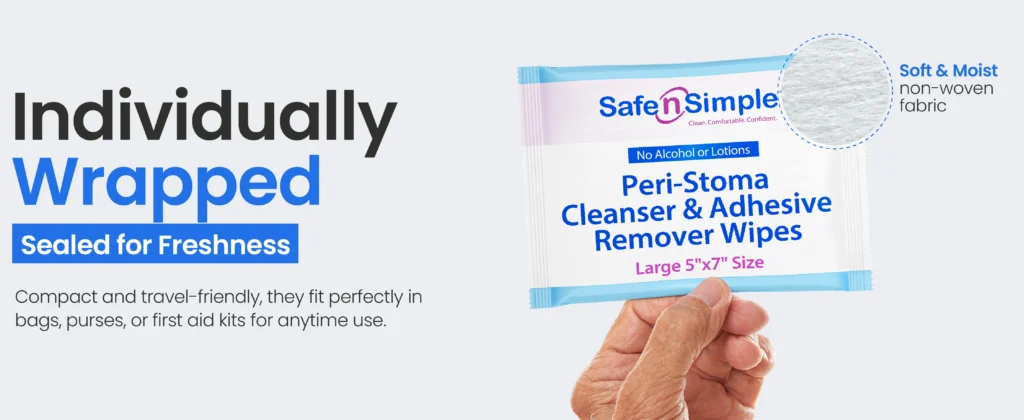

Some ostomy products can be overwhelming. Each user needs to understand what works best for their own unique needs.
When comparing a barrier ring vs paste for stomas, the main difference is how each creates a seal. A barrier ring works like a moldable gasket around the base of the stoma. This makes it the first-line choice for most people who need additional protection against leaks. Ostomy paste is more like caulk. It fills specific small gaps, scars, folds, or uneven areas that could otherwise compromise the seal.
The two products therefore aren’t direct substitutes in every situation. A barrier ring can provide the main seal and paste can supplement it where extra filling is required. Some ostomates only need a ring. Others may benefit from using both.
This guide compares ostomy paste vs barrier rings. You’ll see how they work plus their practical differences and when combining them makes sense.
What Is a Barrier Ring?
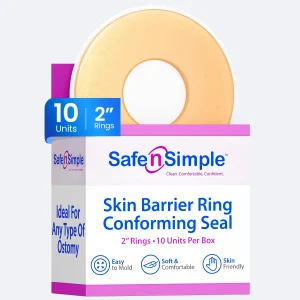
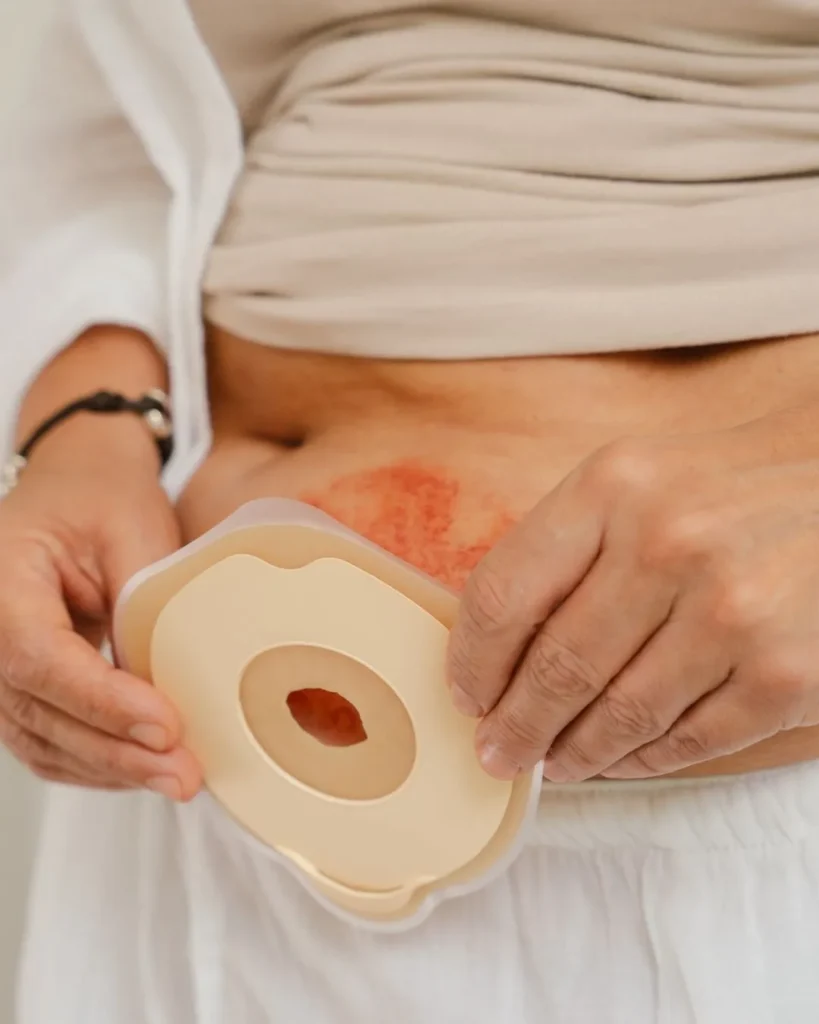
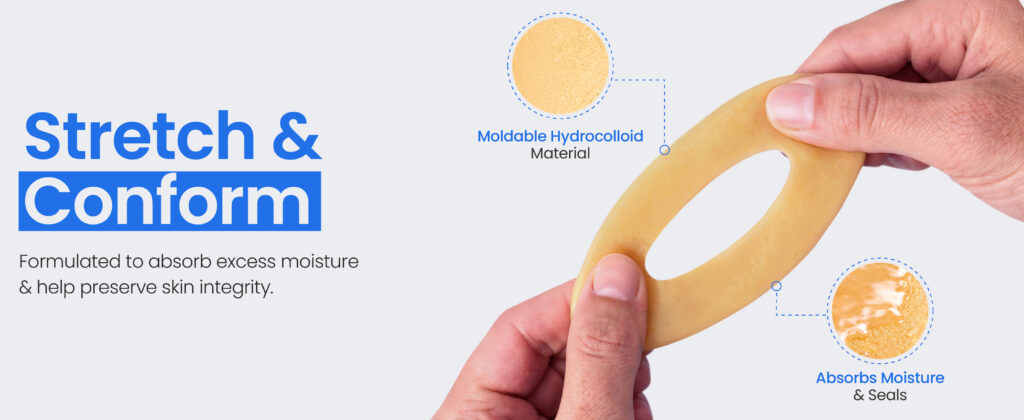
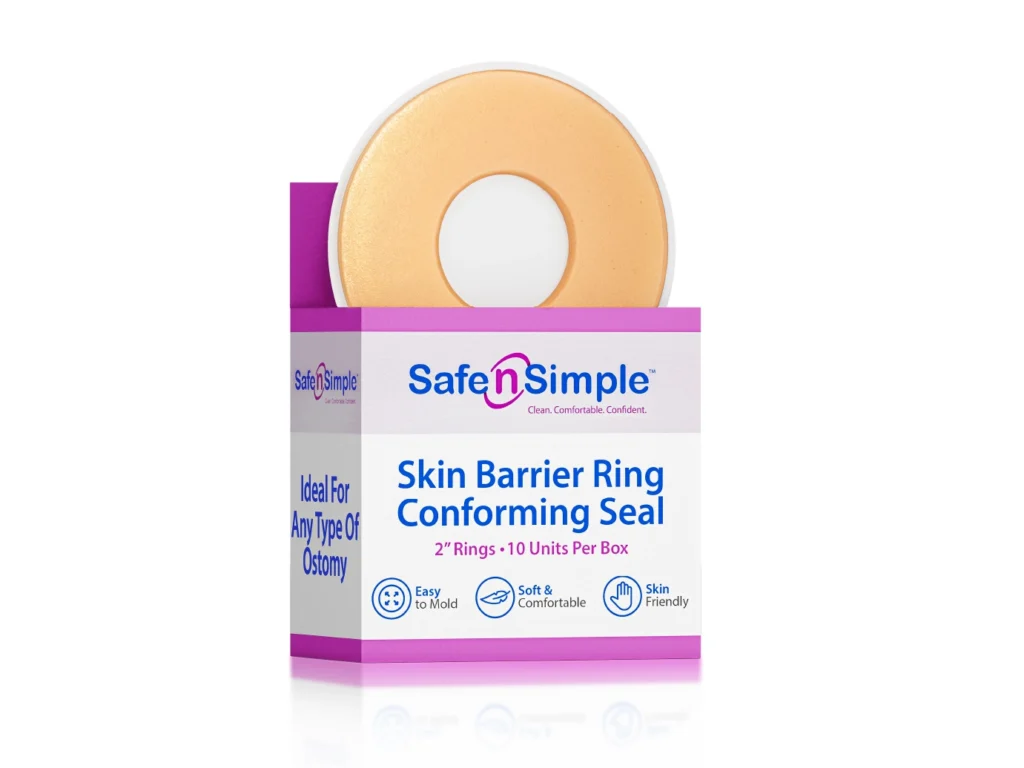
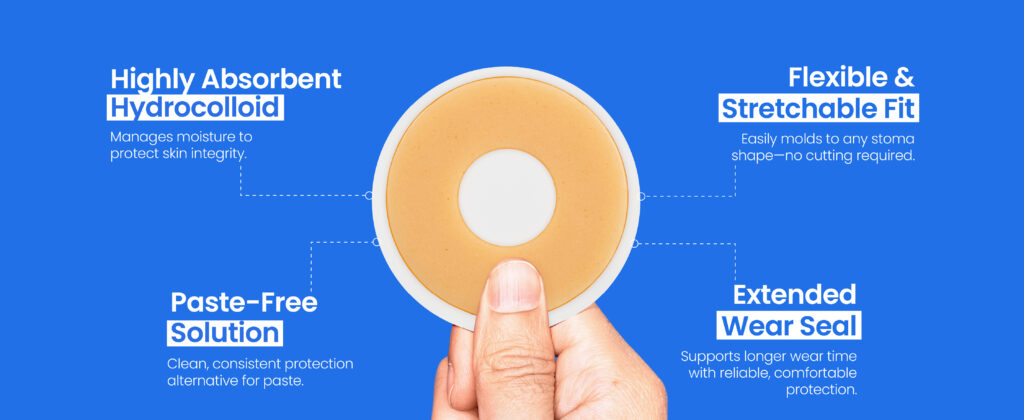
A barrier ring is a soft, moldable hydrocolloid seal placed around the base of the stoma beneath the wafer. It conforms to gaps and uneven contours while absorbing moisture to help maintain the seal.
See What Is an Ostomy Barrier Ring? for a complete explanation of how barrier rings work.
What Is Ostomy Paste?
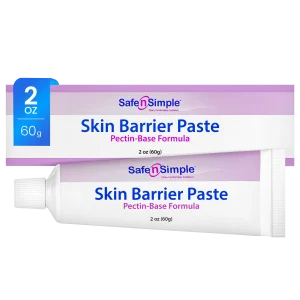
Ostomy paste is a caulking material used to fill scars, folds, dips, and other irregularities beneath the skin barrier. Both alcohol and alcohol-free formulations are available. Remember that products containing alcohol may sting if applied to sore or broken skin. Depending on formulation, ostomy paste may fall under HCPCS A4405 or A4406.
Barrier Ring vs Paste — Key Differences
The main difference between a barrier ring and paste is the type of seal each creates. A barrier ring provides a continuous and gasket-like seal around the stoma.
Paste is a targeted filler used to close smaller gaps and irregularities. This is why a ring will generally be the first option when an ostomate needs additional support beneath the wafer, with paste added when necessary.
There are practical differences too. A moldable barrier ring can be stretched and shaped around the stoma without cutting. Safe n’ Simple Conforming Skin Barrier Rings are also designed to absorb moisture and remove without leaving residue behind. Paste is squeezed from a tube and applied only where filling is needed. It can be stickier and may require more cleaning at appliance changes.
Another consideration is sensitive or sore skin. Barrier rings do not contain alcohol and should not cause the stinging associated with alcohol-based pastes. Alcohol-free ostomy paste is ideal for people who need the gap-filling properties of paste without alcohol.
The comparison below shows why stoma paste vs ring isn’t simply a question of which product is better. They perform different jobs and (crucially) can complement one another.
| Feature | Barrier ring | Ostomy paste |
| Mechanism | Gasket-like continuous seal | Caulk-like targeted filler |
| Application | mold and stretch | Squeeze and spread where required |
| Mess and residue | Clean handling; options designed for residue-free removal | Stickier and may be harder to remove |
| Potential for stinging | Alcohol-free ring material | Alcohol-containing paste may sting sore or broken skin |
| Cutting | No cutting required with moldable rings | Not applicable |
| Absorbency | Absorbs moisture around the stoma | Primarily used to fill irregularities |
| Best for | Creating the main seal and accommodating contours | Filling specific scars, folds, dips and micro-gaps |
When to Use a Barrier Ring
For most ostomates who need extra support beneath their wafer, a barrier ring is a good place to start. Its biggest advantage is that it creates a continuous seal rather than addressing individual gaps one at a time. The ring can be moulded closely around the stoma and shaped to accommodate the variations in the skin.
This can be particularly useful where the skin surface isn’t completely even. Safe n’ Simple Conforming Skin Barrier Rings are designed to stretch and mould into these spaces while absorbing moisture around the stoma. They can therefore provide the main seal without requiring paste or a more complicated combination of products. Their residue-free removal can also make appliance changes cleaner.
A ring may also be preferable for someone with sensitive skin who wants to avoid an alcohol-containing product close to the stoma. Different types of barrier rings can accommodate more specific requirements. This can include deeper contours or situations where greater resistance to erosion is desirable.
There is also clinical evidence supporting the role of barrier rings in peristomal skin management. A multicentre study involving people with ileostomies found improvements in peristomal skin condition while using a moldable barrier ring, alongside high levels of participant satisfaction.
This doesn’t mean everybody with an ostomy automatically needs a ring. However, when the choice is simply barrier ring or paste for creating the primary additional seal, the ring will generally be the more appropriate starting point.
When to Use Ostomy Paste
Ostomy paste becomes particularly useful when there is a specific area that needs filling. A scar running underneath the wafer may create a narrow channel that isn’t completely level even after a barrier ring has been moulded into position. Small dips and other irregularities can create similar problems.
Paste can be applied to these targeted areas much like caulk is used to fill the small spaces around a household fitting. It isn’t intended to function as the main adhesive holding an ostomy appliance in place. Using more paste doesn’t necessarily create a better seal. Instead, its value comes from being able to fill relatively small spaces precisely.
Paste is generally best viewed as a supplemental product rather than the automatic alternative to a barrier ring. If a ring already creates a close seal, adding paste everywhere is unlikely to be necessary. Where one or two stubborn micro-gaps remain then a small amount of paste can provide additional filling.
Safe n’ Simple Skin Barrier Paste can be used alongside a barrier ring where targeted filling is required. A little goes a long way. Your aim is to fill the irregularity rather than create a thick additional layer underneath the appliance.
Can You Use a Ring and Paste Together?
Yes. A barrier ring and ostomy paste can be used together, and this can be particularly useful when the area around a stoma has difficult or irregular contours. The important point is that each product still has a different job to do.
The barrier ring remains the primary seal. It creates the continuous gasket around the stoma and should conform to the broader shape of the skin and help prevent output from finding a route underneath the wafer. Paste can then supplement that seal where a small irregularity leaves a particular space that needs additional filling.
This approach avoids asking paste to do a job for which it isn’t designed. Rather than covering the whole area with paste, only a small amount is needed to caulk the remaining micro-gap. The result is a combination in which the ring handles the general seal and the paste deals with specific imperfections.
More isn’t necessarily better. Applying excessive paste can create an unnecessarily thick or uneven layer and make appliance changes messier. The objective is always to achieve a close and level surface that allows the pouching system to sit securely against the body.
Some ostomates therefore won’t need paste at all. There are those who find the barrier ring and paste combination useful because of their individual body contours. Anyone experiencing repeated leaks despite adjusting their seal may benefit from discussing the pouching system with a WOC nurse rather than continually adding more sealing material.
For broader strategies on managing leaking materials, see our guide on How to Stop Ostomy Pouch Leakage.
Which Should You Choose?
A moldable barrier ring is the better place to start. It provides a continuous gasket-like seal around the stoma, can be shaped without cutting, absorbs moisture, and offers a cleaner alternative to covering larger areas with paste. Safe n’ Simple Conforming Skin Barrier Rings are also designed for residue-free removal and contain no alcohol. This can avoid the potential sting associated with alcohol-based paste.
Paste still has an important role. It is generally more useful as a supplement. Keeping ostomy paste available makes sense for occasions when a section needs additional filling. In these situations, a small amount can work alongside the ring rather than replacing the primary seal.
Individual anatomy also matters. Someone with relatively even skin may find that a standard moldable ring provides everything required. Deeper contours may benefit from a thicker ring. High-output stomas or longer wear requirements can also influence the type of barrier ring chosen. The Safe n’ Simple Skin Barrier Rings range includes options designed for these different circumstances.
A flush or retracted stoma can present additional sealing challenges, and a convex pouching system may sometimes help. An ostomy or WOC nurse can assess the stoma and surrounding contours and provide guidance on whether convexity is appropriate.
The choice doesn’t have to be ostomy paste vs barrier ring in absolute terms. Think of the ring as the baseline that creates the primary seal and paste as the caulk kept available for small imperfections.