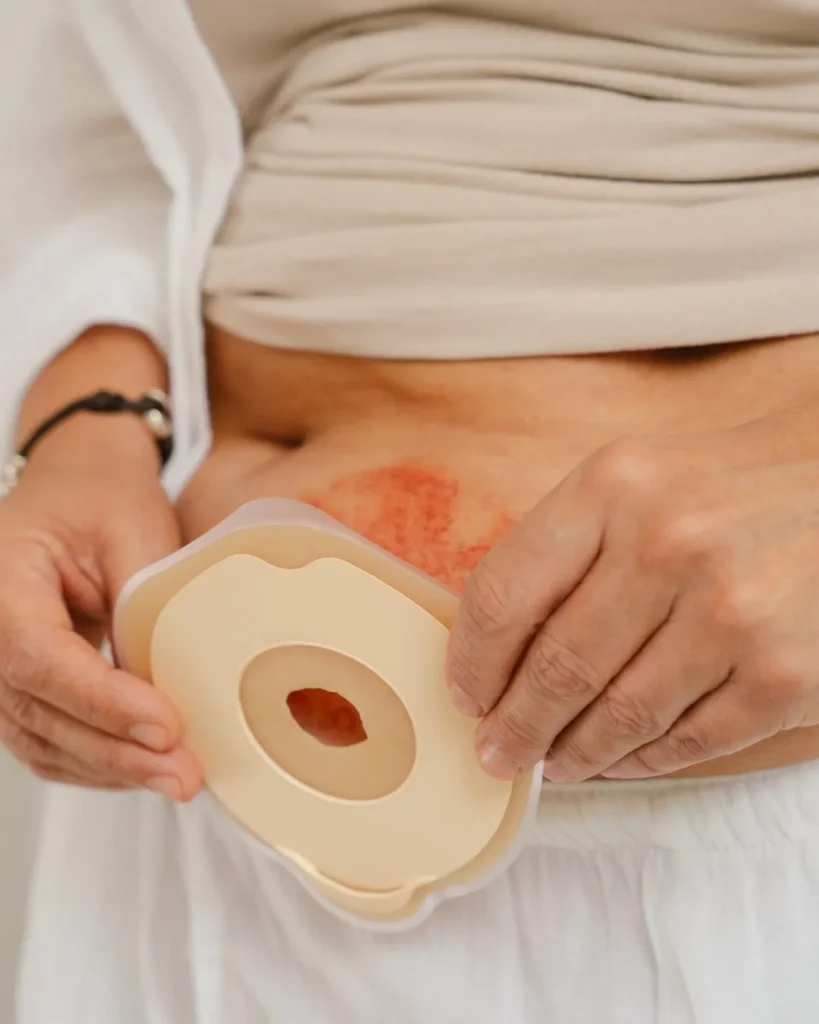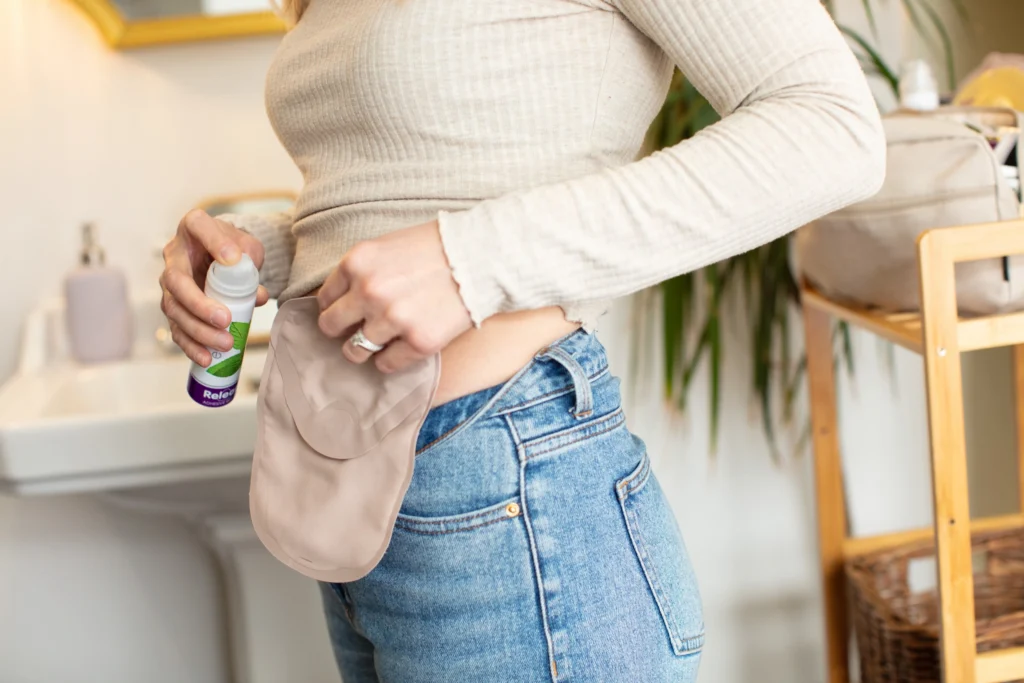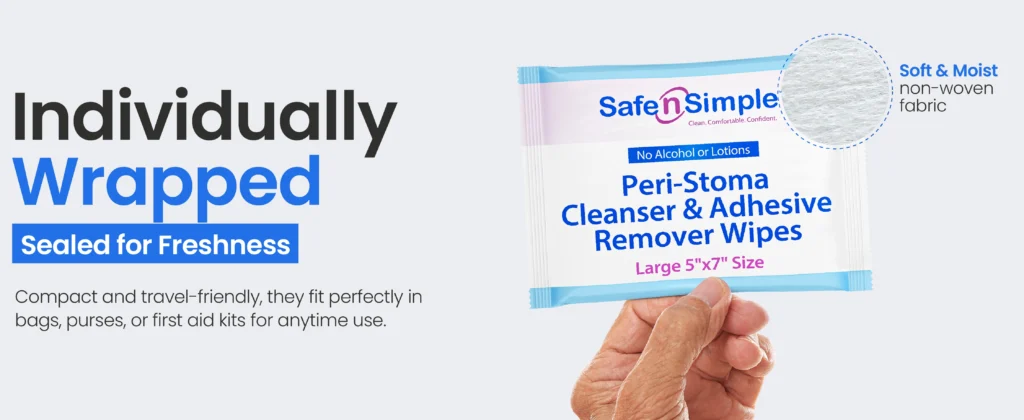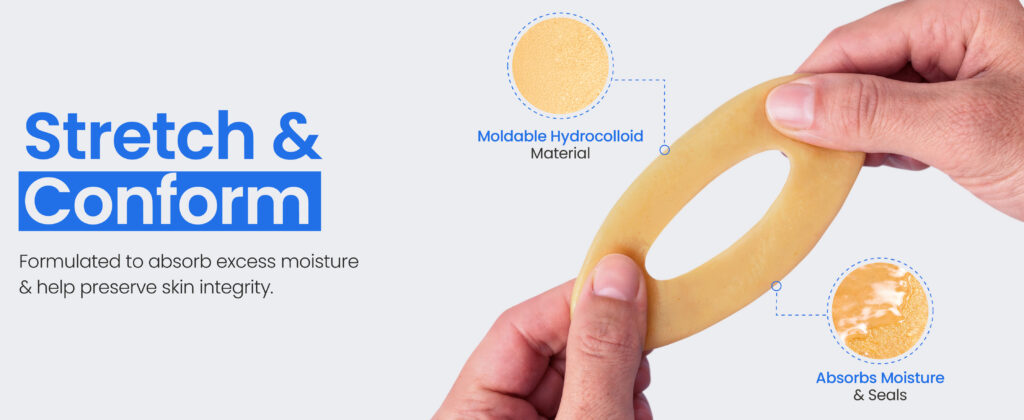

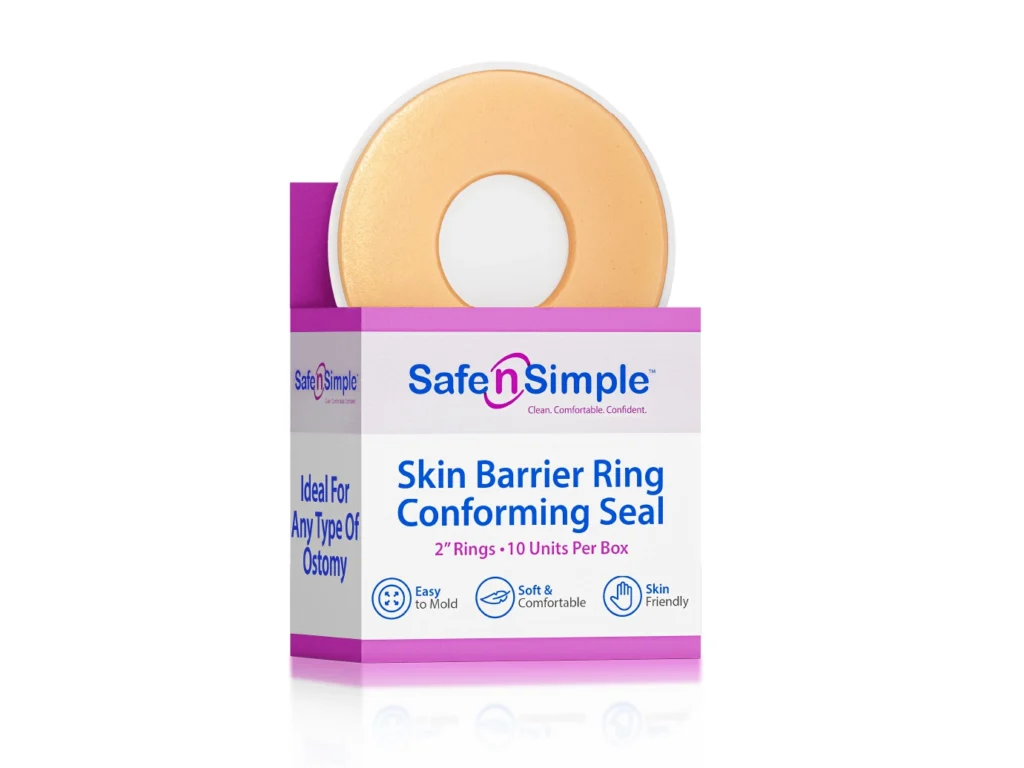
An ostomy barrier ring is a moldable hydrocolloid ring that sits around the base of the stoma. It sits underneath the wafer or skin barrier. The barrier ring creates a closer seal between the appliance and the skin and helps to close the small gaps and uneven areas where output could otherwise escape.
Getting that seal right matters. 2021 research led by Richard R W Brady suggests that around 85% of people with an ostomy experience peristomal skin complications. Leakage and contact with stoma output are among the major concerns.
Barrier rings provide an extra layer between the stoma and the pouching system. They can shape to the body while absorbing moisture around the stoma base.
This guide explains what an ostomy barrier ring is and the different types available.
For practical fitting instructions, see our How to Use an Ostomy Barrier Ring guide. Safe n’ Simple’s Skin Barrier Rings page also provides more information about the available ring options.
What Is an Ostomy Barrier Ring?
An ostomy barrier ring is a flexible seal placed directly around the base of the stoma before the wafer is applied. It is sometimes called a skin barrier ring, stoma ring, barrier seal, or ostomy seal, but these terms generally describe products designed for the same basic purpose of creating a closer fit between the pouching system and the body.
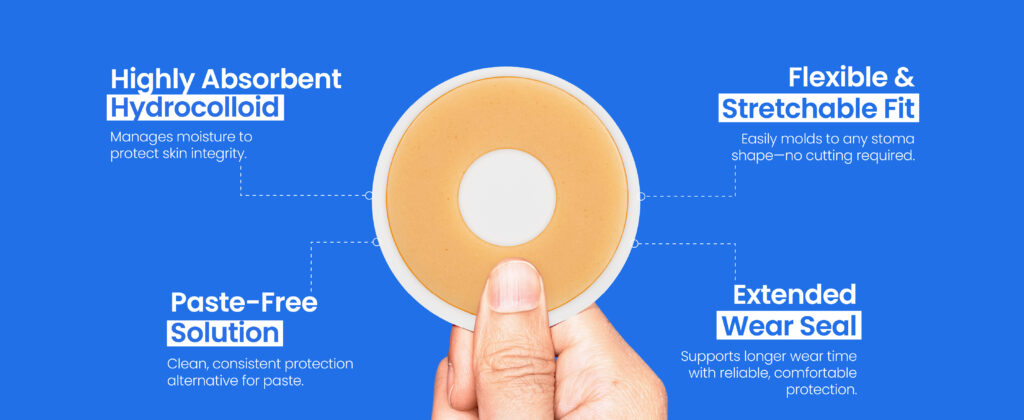
Most barrier rings are made from soft and skin-friendly hydrocolloid materials such as pectin. The material can be stretched and molded to follow the shape of the stoma and surrounding skin. The wafer is then positioned over the top. It sandwiches the ring between the skin and the appliance.
This extra layer is particularly useful because the surface around a stoma is rarely perfectly flat. The ring conforms to small creases and irregular contours and helps create a continuous seal while absorbing moisture around the stoma base.
Barrier rings are classified as ostomy supplies for reimbursement purposes, although the applicable HCPCS code can vary by product and specification. For example, some barrier rings fall under A4385 or A4404, so the individual product listing should be checked rather than assuming one code applies to every ring.
How Does a Barrier Ring Work?
The easiest way to understand an ostomy barrier ring is to think of it as a sort of soft rubber gasket. It sits between the skin and the wafer and molds itself around the base of the stoma and into small creases or uneven areas.
This creates a more continuous seal. Small gaps between the skin and wafer can provide a route for output to travel underneath the appliance. A moldable ring fills these spaces and forms a close-fitting barrier around the stoma. It helps to contain output where it belongs.
Barrier rings also absorb moisture at the stoma base. This helps protect both the surrounding skin and the integrity of the seal, which can reduce leakage and support longer appliance wear. Clinical research has found improvements in peristomal skin condition among people using barrier rings.
Importantly, a ring works as a gasket rather than caulk. Barrier paste serves the caulking role by filling individual folds, scars, or small imperfections.
Our Barrier Ring vs Ostomy Paste guide explains this important distinction in more detail.
What Is a Barrier Ring Made Of?
Most skin barrier rings use soft hydrocolloid materials incorporating ingredients such as pectin. Hydrocolloids absorb moisture while remaining flexible enough to maintain close contact with the skin.
Many modern rings are moldable and stretchable. They can be gently shaped around the stoma to create the required opening. This makes it easier to accommodate stomas and abdominal contours that are not perfectly round or even.
Some formulations also contain skin-supporting ingredients.
Certain Safe n’ Simple rings incorporate aloe and zinc oxide. This combines the physical seal provided by the hydrocolloid with ingredients intended to soothe and protect sensitive peristomal skin.
A soft and absorbent material creates a flexible interface between the skin and the pouching system.
Key Benefits of Using a Barrier Ring
A barrier ring adds another layer of security beneath the wafer without making the pouching routine particularly complicated. Key benefits can include:
- A closer seal. Moldable material fills small gaps and uneven areas around the stoma.
- Peristomal skin protection. Keeping output away from exposed skin reduces direct contact with stool or urine.
- Moisture absorption. Hydrocolloid material absorbs moisture around the stoma base.
- Less mess. Rings provide a convenient paste-free approach to creating the main seal.
- Cleaner removal. Products designed for residue-free removal can simplify appliance changes.
- Longer wear. A better protected seal can help the pouching system remain secure for longer.
Clinical studies of barrier rings have reported improvements in peristomal skin condition. The crucial study “Changes in Peristomal Skin Condition and User Experience of a Novel Ostomy Barrier Ring With Assisted Flow” shows better peristomal condition after using barrier rings.
This evidence helps in supporting their role as more than simply an optional pouching accessory. Their main value comes from improving the interface between the body and the wafer. The skin surface can potentially make achieving a complete seal difficult.
Who Should Use a Barrier Ring?
Not every person with an ostomy will need a barrier ring. They can be particularly useful when achieving a reliable seal with the wafer alone is difficult.
A ring may be worth considering for people with uneven skin around the stoma because its moldable material can conform to these contours. It can also provide additional protection for people experiencing recurrent leaks or whose peristomal skin is particularly sensitive to contact with output.
People with high-output stomas may benefit from the additional moisture absorption and sealing support provided by a ring. A flush or retracted stoma can make it harder to direct output cleanly into the pouch.
A barrier ring may form one part of the pouching setup. A convex appliance can also help some people with flush or retracted stomas by improving the relationship between the stoma and skin barrier. An ostomy nurse can help assess the stoma and suggest an appropriate setup if maintaining a secure seal remains difficult.
Types of Safe n’ Simple Barrier Rings
Barrier rings are available in different designs because not every stoma or body create the same sealing requirements. Within the Safe n’ Simple range, there are some simple and effective options.
- Conforming Skin Barrier Rings. The everyday option for most users. They mold around the stoma to fill gaps and create a close-fitting seal.
- Conforming Extra Thick 4mm Rings. Provide additional depth for deeper creases, dips, and uneven areas.
- Longevity Skin Barrier Rings. Designed for greater resistance to moisture and erosion, making them suited to high output or longer wear requirements.
- Resilient Skin Barrier Rings. Designed to rebound towards their original shape, helping the ring maintain a close, snug fit around the stoma.
The goal isn’t necessarily to choose the most substantial ring. It is to match the type of seal to the stoma and output. The individual aspects of each user need to be considered. More information on the available options can be found on the Safe n’ Simple Skin Barrier Rings page.
How Do You Apply a Barrier Ring?
Applying an ostomy barrier ring is relatively straightforward. Start with clean and completely dry peristomal skin. Then warm the ring between your hands to make it easier to mold. This will make it more malleable.
Shape it around the base of the stoma without leaving gaps, apply the wafer over it, and use gentle hand pressure to help create a secure seal.
The exact technique can vary depending on the ring and pouching system. For complete instructions users can see our How to Use an Ostomy Barrier Ring guide.
Barrier Ring vs Paste
Barrier rings and ostomy paste perform related but different jobs. A barrier ring acts as the primary gasket. It creates a continuous seal around the stoma.
Barrier paste works more like caulk. It fills small creases or remaining gaps that need extra attention.
The two can also be used together when appropriate rather than being strictly competing options. For a closer look at where each works best, see our Barrier Ring vs Ostomy Paste: Which Is Better? guide.