

Removing medical adhesive is part of daily care for many people using ostomy appliances or long-term medical devices. Poorly-implemented adhesive removal can damage the skin and increase the risk of pain or complications.
In short: to remove medical adhesive or tape residue from skin, apply an adhesive remover along the edge, wait 15–30 seconds, then peel the adhesive back slowly and low, parallel to the skin, while supporting the skin with your other hand. Reapply remover if it resists, and never pull straight up or dry-peel.
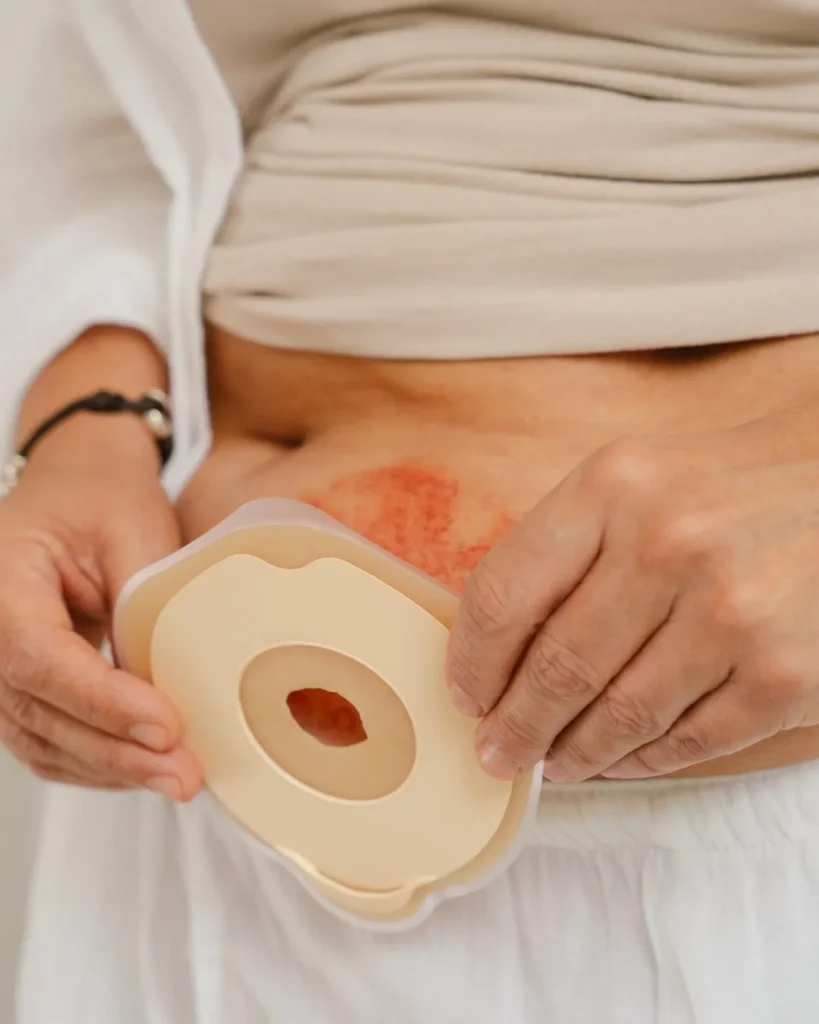
This type of injury is known as Medical Adhesive-Related Skin Injury (MARSI). Consensus guidance published by McNichol et al. identified MARSI as a significant but often under-recognized issue in healthcare. Recent guidance notes that anyone requiring medical adhesive products may be at risk.
Safe removal depends on two things working together:
- Correct removal technique
- The right adhesive remover product
Safe n’ Simple’s adhesive remover range is designed specifically for this purpose. The line includes alcohol-free sprays, alcohol-free wipes, and stronger alcohol-based wipes so users can choose the most appropriate option.
What Is MARSI and Why Safe Removal Matters
MARSI refers to skin damage from adhesive or other causes that remains visible for 30 minutes or longer after adhesive removal. This can include:
- Skin stripping
- Blisters or tears
- Irritant or allergic dermatitis
- Maceration from trapped moisture
- Folliculitis around hair follicles
Mechanical skin stripping is the most common form and usually happens when adhesive is removed too quickly or without enough support for the skin.
Some people face a much higher risk of injury, including:
- Older adults with thinner skin
- Neonates and infants
- Patients using corticosteroids
- People with chronic illness or fragile skin
- Those requiring frequent dressing changes
Research has shown MARSI can develop rapidly in vulnerable patients. This includes neonatal populations.
The key point is that MARSI is often preventable. Proper removal technique and appropriate adhesive removers can significantly reduce trauma during dressing or appliance changes.
Struggling With Adhesive Residue?
Try our alcohol-free adhesive remover spray and wipes for a gentler daily routine.
The “Low and Slow” Technique — The Universal Rule
Most wound care and ostomy guidelines recommend the same basic approach for a way to remove adhesive from skin safely: low and slow.
The process is straightforward:
- Apply adhesive remover to the edge of the adhesive
- Wait around 15–30 seconds
- Gently lift one corner
- Keep the adhesive parallel to the skin rather than pulling upward
- Support the skin with the opposite hand
- Peel slowly in the direction of hair growth
- Stop and reapply remover if resistance occurs
Pulling upward places far more stress on the skin and increases the chance of stripping or tearing.
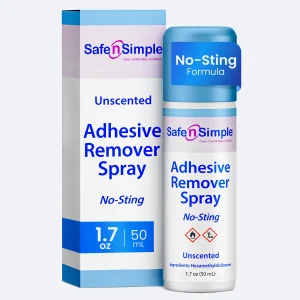
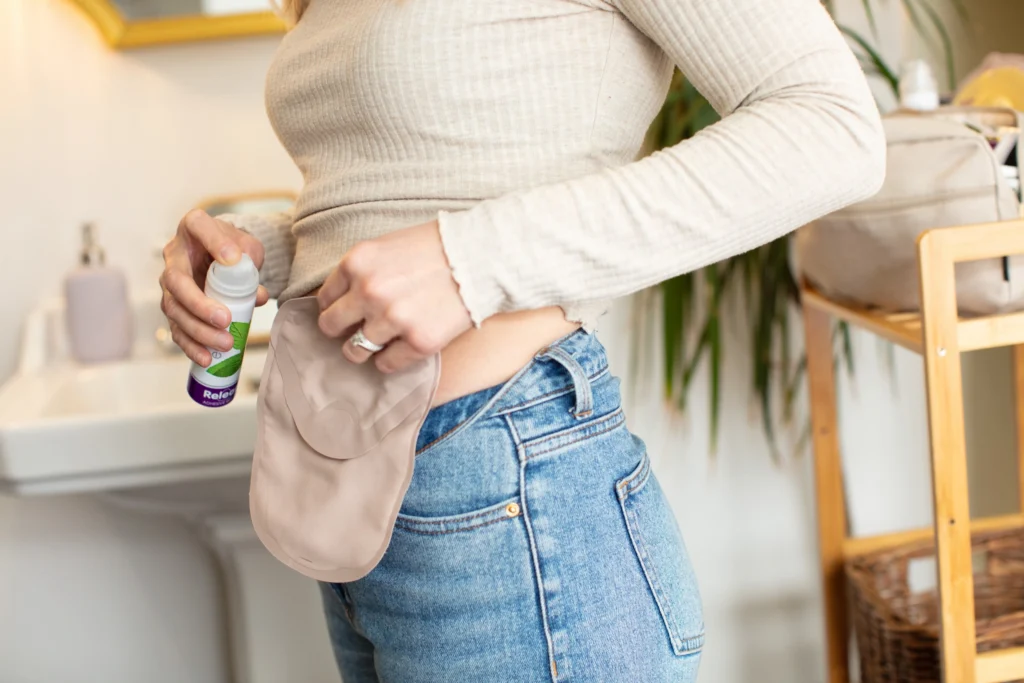
Safe n’ Simple’s Adhesive Remover Spray without Alcohol works particularly well with this method as it can be sprayed continuously along the adhesive edge during removal. This allows gradual release rather than sudden pulling and supports more controlled appliance changes.
Option 1: Alcohol-Free Adhesive Remover Spray
Alcohol-free spray removers are considered the gentlest option for routine removals. Safe n’ Simple’s Adhesive Remover Spray without Alcohol is designed for daily appliance and dressing changes where skin protection is important.
Key features include:
- Alcohol-free, no-sting formula
- No rinsing required
- No oily residue left behind
- Scent-free
- Controlled spray application
- Available in 1.7 oz and 5.1 oz sizes
- HCPC: A4455
The spray is applied directly along the adhesive edge during the “low and slow” removal technique. The adhesive bond loosens and the appliance can be peeled away gradually.
The skin is ready for a new barrier immediately after removal – no oily residues.
Learn more: Safe n’ Simple Adhesive Remover Spray
Option 2: Alcohol-Free Cleansing and Remover Wipes
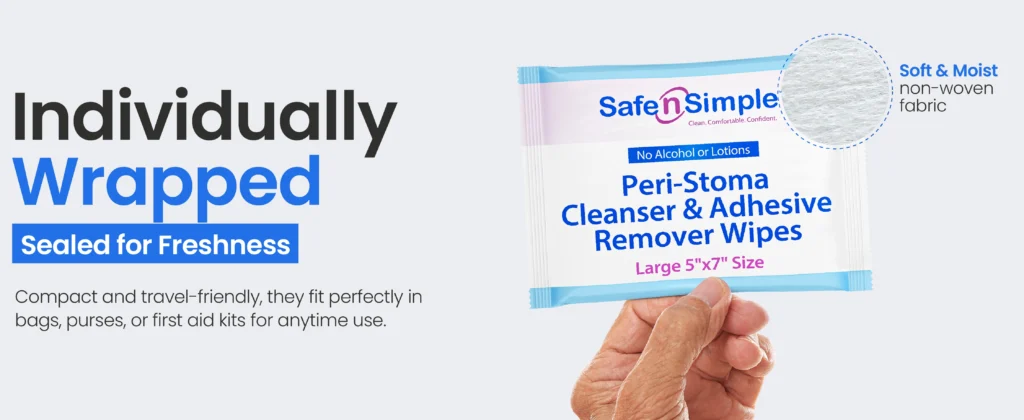
Safe n’ Simple’s alcohol-free Peri-Stoma Cleanser & Adhesive Remover Wipes combine adhesive removal and skin cleansing in one step.
Key features:
- Removes adhesive and cleans skin
- Alcohol-free and no-sting
- No rinsing required
- No oily residue
- Large 5″x7″ wipe size
- Individual packets and resealable pouch options
- HCPC: A4456
The wipes can be used around the appliance edge during removal and then across the peri-stomal area to clear remaining residue and oil buildup before a new appliance is applied.
They are particularly useful for travel and caregiver-assisted changes.
Learn more: Safe n’ Simple Adhesive Remover Wipes Without Alcohol
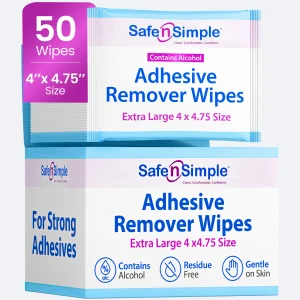
Option 3: Alcohol-Based Remover Wipes for Stubborn Residue
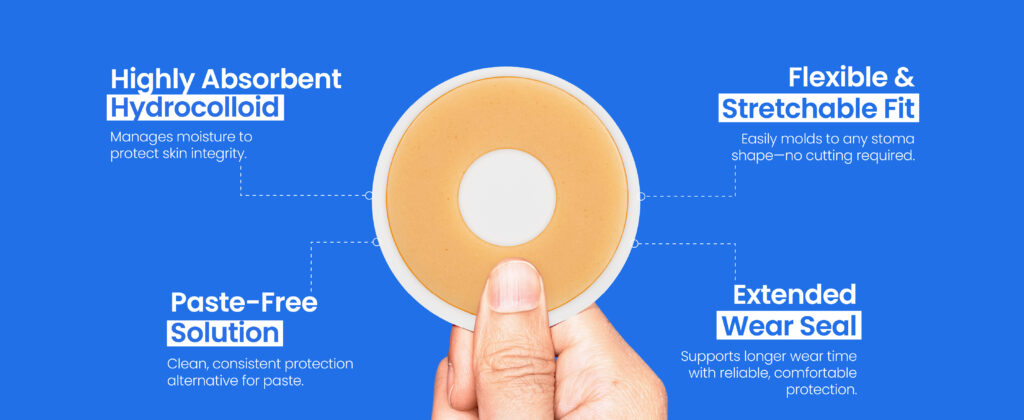
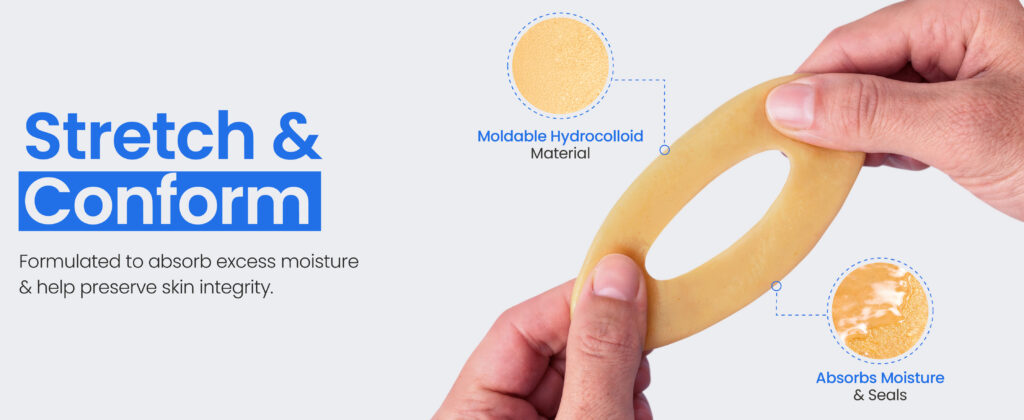
Some adhesives require stronger removal power. This is often the case with hydrocolloid barriers or long-wear surgical tapes. Safe n’ Simple’s Adhesive Remover Wipes with Alcohol are designed for those heavier-duty situations.
Key features:
- Alcohol-based adhesive removal
- Designed for stubborn residue
- Available in 2″x2″ and 4″x4.7″ sizes
- HCPC: A4456
- Rinsing required after use
These wipes are intended for tougher buildup where alcohol-free removers may not fully dissolve the adhesive. They are generally better suited to intact skin rather than broken or fragile areas. Alcohol can potentially irritate skin.
Learn more: Safe n’ Simple Adhesive Remover Wipes With Alcohol
How to Choose the Right Adhesive Remover
No two people are exactly the same in their needs. Different situations call for different remover types.
- Sensitive skin or daily ostomy changes: alcohol-free spray
- Cleaning and adhesive removal together: alcohol-free wipes
- Heavy or stubborn adhesive buildup: alcohol-based wipes
- Travel or on-the-go changes: wipes in packets or resealable pouch
- Clinical environments: sprays for controlled application or single-use wipes for hygiene
All three formats are designed to support the same “low and slow” removal technique recommended in wound care guidance.
Step-by-Step: How to Remove Medical Adhesive From Skin
Gather supplies first and foremost. This includes adhesive remover, cloths, soap, and replacement barriers if needed.
- Apply the spray or wipe around the adhesive edge
- Wait 15–30 seconds
- Lift one corner gently
- Continue peeling slowly while supporting the skin
- Reapply remover if resistance occurs
- Use alcohol-based wipes only for stubborn residue if necessary
- Rinse if alcohol wipes were used
- Pat the skin dry
- Check for irritation before reapplying a new appliance
Pro tip: Keep an adhesive remover spray near your regular changing area and carry individual wipe packets for travel or unexpected appliance changes.
Special Considerations for Vulnerable Skin
Some patients face a much higher risk of skin injury during adhesive removal and benefit from gentler approaches. A reliable medical adhesive remover becomes even more crucial in this scenario.
- Neonates and infants: alcohol-free removers are preferred because infant skin is significantly thinner and more fragile.
- Older adults: avoid dry-peeling whenever possible. Alcohol-free sprays or wipes are generally recommended for routine changes.
- Ostomy patients: products designed for peri-stomal use can simplify care by combining cleansing and adhesive removal in one step.
- Post-surgical patients: adhesive removers should not be applied directly to open incisions unless advised by a clinician.
- Patients on corticosteroids or anticoagulants: extra care is needed because the skin may tear or bruise more easily.
Safe n’ Simple’s alcohol-free spray and alcohol-free Peri-Stoma Cleanser & Adhesive Remover Wipes are designed for gentle routine removal on even the most sensitive skin.
Preventing Skin Damage Before It Happens
Preventing MARSI starts before the adhesive is removed.
Helpful practices include:
- Ensuring you are applying barriers only to clean and dry skin
- Using the correct adhesive strength for the situation
- Trimming rather than fully shaving hair in adhesive areas
- Changing dressings on schedule
- Using adhesive remover instead of dry-peeling
Wound care guidance consistently identifies proper removal technique as one of the most important ways to reduce avoidable skin damage.
Safe n’ Simple also offers skin barrier products designed to help protect vulnerable skin during repeated appliance or dressing changes.
When to Seek Medical Help
Medical advice is important if skin damage does not improve or begins worsening. Always consult a professional if you have concerns.
Seek help for:
- Skin tears or blisters that do not heal
- Signs of infection such as redness, warmth, swelling, pus, or fever
- Persistent rash matching the adhesive pattern
- Skin breakdown near a stoma or surgical site
- Repeated MARSI despite correct technique
A WOC nurse or healthcare professional can assess the skin and recommend changes to removal technique or appliance fit.